
Dholavira, located on Khadir Bet in the Kutch district of Gujarat, is one of India’s most fascinating heritage destinations. Famous for its ancient Harappan civilisation, impressive water conservation systems, archaeological remains and dramatic desert landscapes, Dholavira offers a memorable experience for history lovers, families, couples, photographers and road-trip enthusiasts.
Choosing the best time to visit Dholavira can make your trip much more comfortable. The destination experiences extremely hot summers, a seasonal monsoon and cooler winters. Pleasant weather is particularly important because exploring the archaeological site involves considerable outdoor walking.
Generally, October to March is the preferred travel period, with November to February offering particularly comfortable conditions for sightseeing. However, the ideal month depends on whether you want to explore the UNESCO World Heritage Site, enjoy the open desert landscape, photograph sunsets or combine Dholavira with a wider Kutch holiday.
In this guide, you will learn about Dholavira’s weather, the best tourism season, month-wise travel conditions, attractions, accommodation options and practical planning tips.
What is the best time to visit Dholavira?
The best time to visit Dholavira is usually October to March, when daytime conditions are more suitable for exploring the ancient city and surrounding landscapes. November, December, January and February are particularly popular choices for travellers planning a heritage-focused holiday in Kutch.
Winter is a good time for walking around the excavated structures, examining the ancient reservoirs and taking photographs without facing the intense heat of summer.
The cooler months are also suitable for combining Dholavira with other attractions in Kutch, including Bhuj, the White Rann, Kala Dungar and Mandvi. If you are travelling during the Rann Utsav season, remember that the festival’s dates and activities vary by year, and Dholavira is a separate destination from the main festival area in Dhordo.
Quick guide: When should you visit?

Best overall
November to February
Cooler weather for archaeology, sightseeing, photography and outdoor exploration.

October and March
Useful alternatives for travellers seeking a shoulder-season trip, although daytime heat can still be significant.

April to June
Generally the least comfortable period for outdoor sightseeing because of high temperatures.

July to September
The landscape can become greener, but rainfall and road conditions should be checked before travelling.
Dholavira weather and climate
Dholavira has a dry, semi-arid climate, with very hot summers and comparatively cool winters. Rainfall is limited for much of the year, although the monsoon can bring rain to the region and temporarily change the appearance of the surrounding landscape.
According to climate data reproduced in a Gujarat tourism planning report, May and June are among the hottest months, with average maximum temperatures exceeding 40°C. January has some of the lowest average minimum temperatures. These are historical climate averages, not a forecast for your travel dates.
Average monthly temperatures in Dholavira
The following figures are approximate historical averages in degrees Celsius. Actual temperatures can vary from year to year.
| Month | Average minimum | Average maximum | Travel advice |
|---|---|---|---|
| January | 8°C | 27°C | Excellent for sightseeing |
| February | 11°C | 31°C | Very good for outdoor exploration |
| March | 16°C | 36°C | Visit early in the day |
| April | 21°C | 40°C | Hot; carry extra water |
| May | 25°C | 42°C | Avoid prolonged midday exposure |
| June | 28°C | 40°C | Very hot; check conditions |
| July | 27°C | 36°C | Check rainfall and road conditions |
| August | 26°C | 34°C | Possible rain and humid periods |
| September | 24°C | 35°C | Weather gradually transitions |
| October | 20°C | 37°C | Pleasant mornings; afternoons may be hot |
| November | 14°C | 34°C | Good for sightseeing, especially mornings |
| December | 9°C | 29°C | Comfortable days and cooler nights |
Source: Historical monthly averages in the climate data reproduced in the Gujarat tourism planning report. Figures are rounded.
Important: Pack light clothing for daytime, a light jacket for winter evenings and comfortable walking shoes. Check the forecast shortly before travelling, especially during the monsoon.
Month-wise guide to the best time to visit Dholavira

January – A great month for heritage tourism
January is suitable for exploring the Harappan ruins, reservoirs and surrounding desert scenery. The mornings and evenings can be cold, so carry a light jacket.

February – Ideal for sightseeing and road trips
February is another excellent option for families, couples and groups. Plan an overnight stay if you want to explore the archaeological site without rushing.

March and April – Warmer conditions
March can still work well with an early start. April becomes considerably hotter, making long outdoor walks less comfortable.

May and June – Peak summer heat
These months are generally less suitable for leisure sightseeing. If you must travel, arrange transport in advance and minimise walking during the hottest hours.

July to September – Monsoon season
Rain can add colour to the landscape, but local weather and road conditions may affect travel. Check access to attractions and accommodation before departure.

October to December – Tourism season begins
October can have hot afternoons, while November and December generally become more comfortable. These months are good for planning a wider Kutch trip.
Best season for Dholavira tourism
Winter: November to February
Winter is the best overall season for Dholavira tourism. You can spend more time outdoors, examine the archaeological structures and enjoy the open landscapes without the intense summer sun.
This period is especially suitable for:
- Families travelling with children or older adults.
- Couples interested in scenic road trips and sunset photography.
- History enthusiasts exploring the Harappan civilisation.
- Travellers combining Dholavira with other Kutch destinations.
Book your accommodation and transport early for popular travel dates, particularly around weekends, holidays and major festival periods.
Summer: March to June
Summer brings high temperatures, especially in April, May and June. Walking through a large archaeological site can become tiring, and shade may be limited in exposed areas.
If summer is your only option, begin sightseeing early, carry sufficient drinking water and follow local advice on safe visiting hours.
Monsoon: July to September
The monsoon offers a different view of the Kutch landscape, with occasional greenery and seasonal water in low-lying areas. However, rainfall may affect road conditions and travel schedules.
This season may suit flexible travellers who are more interested in the landscape than guaranteed dry-weather sightseeing.
Best places to visit in Dholavira

1. Dholavira Archaeological Site
The main attraction is the ancient Harappan city, recognised as a UNESCO World Heritage Site in 2021. Explore its fortified areas, streets, reservoirs and evidence of advanced urban planning.

2. Ancient water reservoirs
Dholavira is famous for its sophisticated water management system. Its reservoirs and channels demonstrate how the Harappan inhabitants managed water in a dry environment.

3. Road to Heaven
This scenic road through the salt-flat landscape is a popular photography stop. Weather, visibility and access conditions affect the experience, so confirm local guidance before travelling.
Suggested time: 30–60 minutes, depending on access and photography plans.

4. Fossil Park
Add a fossil-related stop to your itinerary if access is available. It offers a different perspective on the geological history of the region and complements a heritage-focused visit.
Suggested time: Allow 30–60 minutes, subject to access.

5. Surrounding salt plains and viewpoints
The expansive landscape around Khadir Bet provides opportunities for scenic drives, nature observation and sunset photography. The appearance of the salt flats changes with the season and water conditions.
Things to do in Dholavira
A visit to Dholavira is about more than seeing ancient ruins. The destination combines archaeology, geology, landscape photography and a peaceful road-trip experience.
- Explore the Harappan city and learn about its town planning.
- Observe the ancient reservoirs and water conservation structures.
- Photograph the open salt plains during suitable light.
- Enjoy sunrise or sunset views from permitted and accessible locations.
- Learn about the region’s archaeological significance before your visit.
- Combine sightseeing with a local cultural experience or a traditional Kutchi meal where available.
- Spend a night in the Dholavira area to avoid making the return journey in a hurry.


Travel tips for visiting Dholavira
A little preparation can make your Dholavira trip easier and more comfortable.
- Start early: Morning sightseeing is generally more comfortable than walking in the afternoon heat.
- Carry drinking water: The climate is dry, and long outdoor walks can increase dehydration risk.
- Wear comfortable shoes: The archaeological site covers a large area, so suitable footwear is important.
- Check site timings: Confirm the current opening hours, ticket requirements and any closures with the relevant authorities before travelling.
- Carry sun protection: Sunglasses, a cap, sunscreen and light clothing are useful.
- Plan your fuel and meals: Services can be limited on some stretches of rural roads. Plan stops ahead of time.
- Keep extra travel time: Road journeys can take longer than expected depending on route, weather and stops.
- Respect heritage rules: Do not climb restricted structures, remove objects or leave litter at archaeological locations.
- Book accommodation in advance: Winter weekends and holiday periods may have higher demand.
- Check network coverage: Download maps and save important booking details before leaving areas with reliable connectivity.
Suggested 2-day Dholavira itinerary
This itinerary is a practical starting point for travellers who want to explore Dholavira at a relaxed pace. Adjust it according to opening hours, road conditions and the availability of local attractions.
Day 1 — Journey and local exploration
- Travel to Dholavira from your chosen starting point, allowing enough time for breaks.
- Check in to your pre-booked accommodation and rest after the drive.
- Explore nearby accessible landscapes or viewpoints if time and conditions permit.
- Enjoy dinner and an overnight stay in the Dholavira area.
Day 2 — Heritage and archaeology
- Have breakfast and reach the archaeological site around its confirmed opening time.
- Spend the morning exploring the ancient city, reservoirs and other accessible sections.
- Visit the Fossil Park or Road to Heaven if access and timing permit.
- Begin your return journey or continue to another destination in Kutch.
For travellers coming from Bhuj, it is worth checking the route and journey time before finalising a same-day return. Gujarat Tourism publishes route guidance and transport information for Dholavira.
Where to stay in Dholavira
Choosing the right accommodation is important when planning a Dholavira trip. An overnight stay can help you explore the archaeological site at a comfortable pace and avoid a rushed return drive.
StayGuru The Heaven Resort – Dholavira
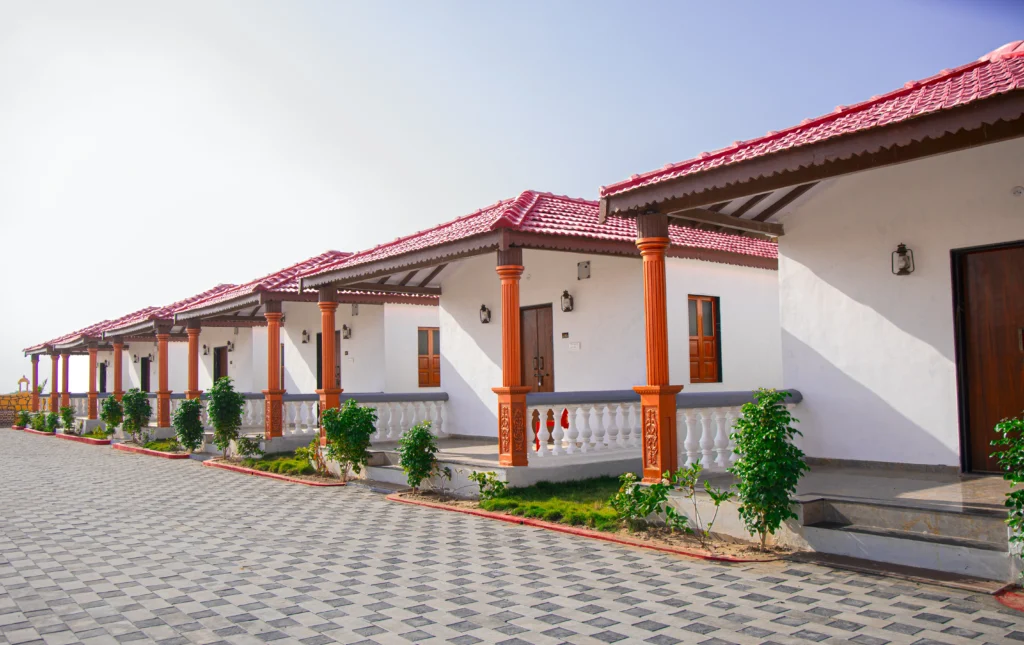
For travellers searching for a comfortable resort stay near Dholavira, StayGuru The Heaven Resort is another property to consider. It can be included in a heritage-focused itinerary for families, couples and groups who prefer to stay in the Dholavira region rather than travel back to Bhuj immediately after sightseeing. Check the current location details, available cottage or room types, amenities, meal arrangements and booking conditions directly with StayGuru before confirming your reservation.
StayGuru Heaven Resort
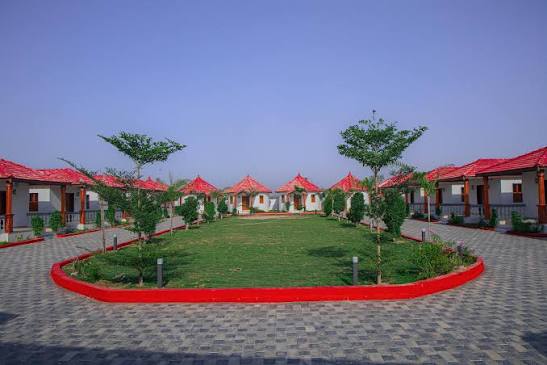
StayGuru Road to Heaven Resort is another option for visitors exploring the Dholavira region and the surrounding desert scenery. Its published property information describes Kutchi-style accommodation, including tent categories, and facilities such as room service, air conditioning, hot and cold running water and parking. Confirm availability and the exact amenities included in your selected room category before booking.
StayGuru accommodation in Bhuj
If you prefer to stay in Bhuj, StayGuru has several hotel and residency options that can be considered for a wider Kutch itinerary.
- StayGuru Hotel Atithi: Consider for a Bhuj-based itinerary with road transfers to regional attractions.
- StayGuru Usha Residency: An option to compare for a city stay.
- StayGuru Hariom Residency: Another accommodation option in Bhuj.
- StayGuru Park View Residency: Consider when comparing room types, location and budget.
- StayGuru Resort Farm Villa: A resort-style option in the Bhujodi area.
Explore the StayGuru property collection to compare current availability and booking details.
Other accommodation websites
Depending on your itinerary, you can also explore these websites for additional accommodation choices. Check each property’s location carefully before booking because a stay in Bhuj, Mandvi or Dhordo is not necessarily close to Dholavira.
AYO Hospitality Private Limited brings hospitality and travel services together through its associated accommodation and travel businesses. When planning a multi-destination Kutch holiday, compare each property’s location with your intended route, rather than choosing accommodation by price alone.
How to reach Dholavira
Dholavira is located on Khadir Bet in the Kutch district of Gujarat. Road travel is the most practical way to reach the destination, and visitors should allow sufficient time for the journey.
By road
You can travel to Dholavira from Bhuj, Ahmedabad or other major cities in Gujarat. Gujarat Tourism provides route information through Bhachau and Rapar for visitors travelling from the Bhuj side. Confirm the exact route and journey time with a current navigation service before departure.
By train
Samakhiali is one of the railway stations serving travellers heading towards Dholavira. Depending on your train, Bhachau, Gandhidham or Anjar may also be useful arrival points. You will need onward road transport.
By air
Bhuj Airport is one option for visitors flying into Kutch. From the airport, continue to Dholavira by road. Check current flight schedules and ground-transfer arrangements before booking.
By taxi or cab
A private taxi is a convenient choice for families, couples and groups who want flexibility over departure times and sightseeing stops.
Hariom Tours & Travels can be considered for taxi and cab arrangements, subject to availability and confirmation of the required route. For a broader itinerary, Kutch Tours & Travels offers a starting point for planning accommodation, transport and sightseeing.
Dholavira tour packages and transport planning
A planned tour can be particularly useful if Dholavira is only one part of your Kutch holiday. Instead of organising every transfer separately, travellers can explore a package that combines accommodation, sightseeing and transport.
Kutch Tours & Travels publishes fixed and customised Kutch tour options, including itineraries that cover Dholavira alongside other regional attractions. Package inclusions and prices depend on the selected itinerary and travel dates.
Explore the following options:

Dholavira heritage tour
Suitable for travellers whose main interest is the ancient Harappan civilisation and the surrounding landscape.

Kutch multi-destination tour
Combine Dholavira with Bhuj, the White Rann and Mandvi, depending on the time available.

Taxi and cab services
Useful for private sightseeing, station or airport transfers and outstation travel, subject to route and vehicle availability.
Before paying for any package, ask for written confirmation of the itinerary, room category, meals, vehicle type, sightseeing inclusions, taxes, cancellation conditions and any separate entry fees.
Frequently asked questions
1. What is the best time to visit Dholavira?
October to March is generally the preferred period, with November to February particularly suitable for comfortable outdoor sightseeing. Check current weather conditions before travelling.
2. Is Dholavira worth visiting in December?
Yes. December is a good month for exploring the Harappan archaeological site, ancient reservoirs and surrounding landscapes. Carry warm clothing for cooler mornings and evenings.
3. Can I visit Dholavira in summer?
Yes, but April to June can be extremely hot. If you travel during summer, plan outdoor sightseeing early in the morning and carry drinking water and sun protection.
4. How many days are enough for Dholavira?
One full day can cover the main archaeological attraction and selected nearby sites, depending on opening hours and travel arrangements. Two days are preferable if you want a relaxed experience with an overnight stay.
5. Is Dholavira suitable for a family trip?
Yes. Families interested in history, archaeology and nature can enjoy Dholavira. Plan breaks, carry water and consider the walking requirements, especially when travelling with young children or older adults.