Dholavira Water Management System – Brilliant Harappan Engineering Explained
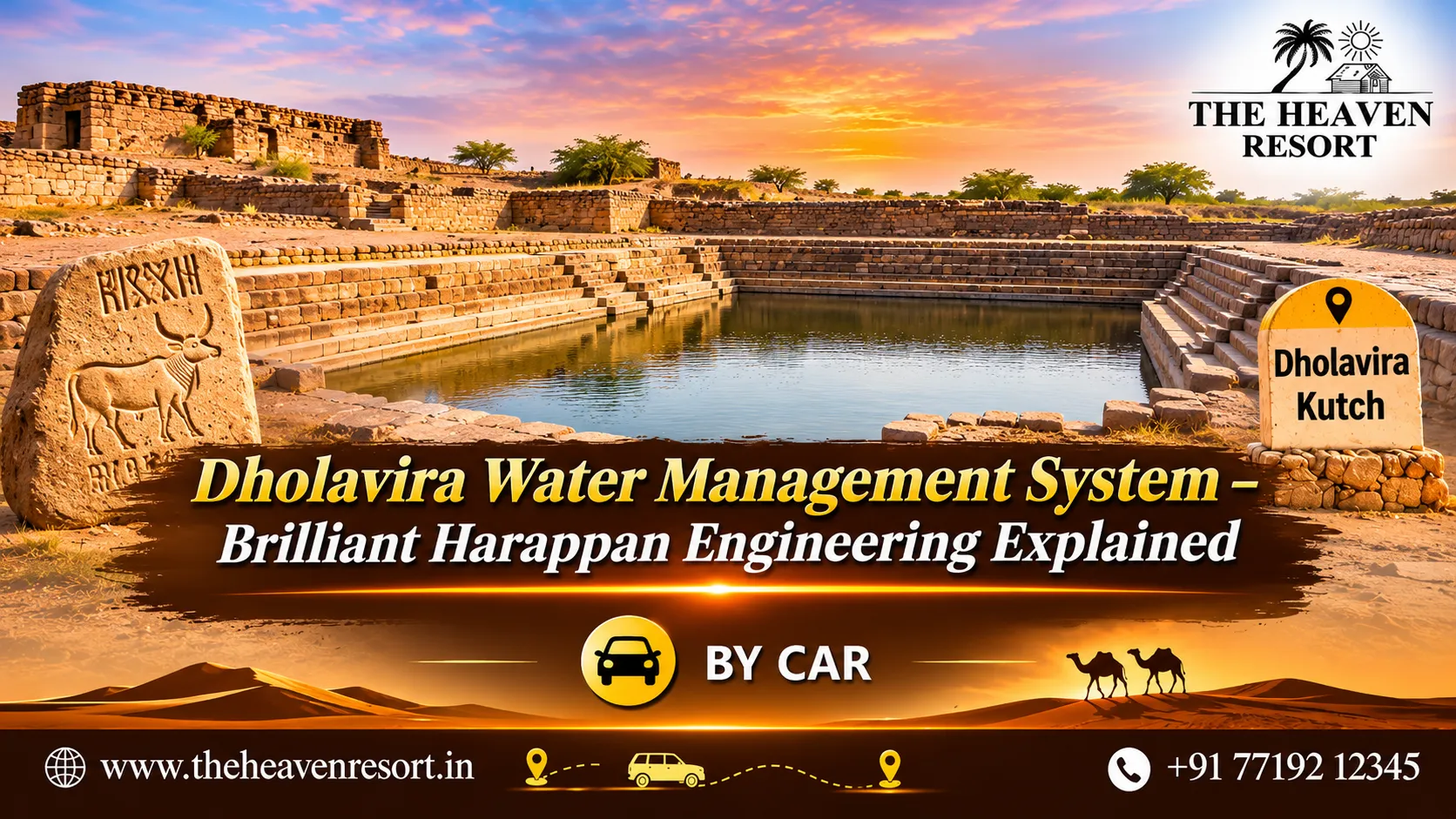
The Dholavira water management system is particularly fascinating because the ancient inhabitants developed an organised method of collecting, storing and managing water despite living in an arid region with limited water resources. Their engineering skills demonstrate how the Harappan civilization adapted to challenging environmental conditions thousands of years ago.
Recognised as a UNESCO World Heritage Site in 2021, Dholavira continues to attract historians, archaeologists and travellers interested in India's ancient heritage.
1. Why Was Water Management Important in Ancient Dholavira?
Dholavira was strategically established on Khadir Island, where water availability was limited. Unlike settlements located beside permanent rivers, the ancient city depended significantly on seasonal water sources.
The two important seasonal streams associated with the settlement were:
-
Mansar: Located towards the northern side of the ancient city.
-
Manhar: Located towards the southern side of the settlement.
Instead of depending entirely on natural water availability, Harappan inhabitants developed systems to capture seasonal water and preserve it for future use.
This planning helped support residential activities and the development of a well-organised urban settlement.
2. Major Features of the Dholavira Water Management System
The ancient water conservation system included several carefully planned structures. Each played an important role in collecting, directing or storing water.
A. Large Stone-Built Reservoirs

One of the most impressive features of Dholavira is its large stone-built reservoirs.
These reservoirs were constructed to store water collected from seasonal streams and rainfall. Their location around the fortified city reflects careful planning and an understanding of the surrounding landscape.
Several reservoirs have been identified near the eastern and southern sides of the citadel.
B. Rainwater Harvesting and Water Diversion
The Harappans understood the importance of capturing available water during seasonal rainfall.
Their system used natural drainage patterns and constructed channels to guide water towards storage areas.
This approach helped them make better use of limited rainfall rather than allowing all available water to flow away.
C. Dams and Water Channels

Dams and water-diversion structures were important elements of the city's water infrastructure.
They helped control and direct seasonal water towards the collection and storage system.
The archaeological evidence demonstrates that the Harappans understood how to use local geographical conditions for water conservation.
D. Rock-Cut Wells
Apart from reservoirs, Dholavira also had wells that provided another means of accessing water.
Some wells were constructed by cutting into the natural rock, demonstrating the technical knowledge and construction skills of the Harappan people.
3. What Makes Dholavira's Engineering So Special?
The remarkable aspect of the Dholavira water management system is its integration with the overall city planning.
The inhabitants did not simply construct individual water tanks. They developed a coordinated arrangement involving water collection, storage, drainage and access.
Important engineering achievements include:
-
Strategic use of two seasonal streams.
-
Large reservoirs built using locally available stone.
-
Water-diversion and collection arrangements.
-
Rock-cut wells for accessing water.
-
Planned drainage and water-harvesting structures.
These features make Dholavira an outstanding example of ancient urban engineering.
4. Dholavira Water Management System at a Glance
|
Feature |
Importance |
|---|---|
|
Mansar Stream |
Seasonal water source |
|
Manhar Stream |
Seasonal water source |
|
Stone Reservoirs |
Water storage |
|
Dams |
Water control and diversion |
|
Channels |
Water movement |
|
Rock-Cut Wells |
Access to water |
|
Drainage System |
Planned water management |
5. Where Can You See the Ancient Water Reservoirs in Dholavira?
Visitors exploring the Dholavira Harappan archaeological site can see the remains of the ancient city's water infrastructure.
The reservoirs, stone structures, fortifications and planned urban sections provide an opportunity to understand the engineering achievements of the Harappan civilization.
For a more complete experience, explore the Dholavira travel guide before planning your visit.
6. Why Visit Dholavira? Six Important Travel Notes
If you are planning a visit to this historical destination, keep these points in mind:
-
Explore the reservoirs: Spend time understanding the ancient water conservation structures.
-
Visit the archaeological site: Discover the citadel, middle town, lower town and other excavated remains.
-
Learn about Harappan history: Understand how ancient people organised their settlements.
-
Carry drinking water: Dholavira has a dry climate, particularly during warmer months.
-
Wear comfortable footwear: You will need to walk around the archaeological site.
-
Plan an overnight stay: A longer visit allows you to explore the destination without rushing.
7. Where to Stay During Your Dholavira Visit?

For travellers planning to explore the Harappan archaeological site, StayGuru The Heaven Resort, Dholavira, is a convenient local accommodation option. Located opposite the famous Road to Heaven, the resort offers traditional Rajwadi Bhungas and cottages, making it suitable for travellers looking for a comfortable stay while exploring the heritage and landscapes of Kutch.
Explore the StayGuru The Heaven Resort in Dholavira and contact the reservation team to check room availability, current rates and meal arrangements.
8. Conclusion
The Dholavira water management system represents one of the most impressive achievements of the ancient Harappan civilization. Through reservoirs, dams, wells and carefully planned water channels, the inhabitants developed an effective approach to managing limited water resources.
Even thousands of years later, these archaeological remains offer valuable insights into sustainable water conservation and urban planning.
A visit to Dholavira is not just a historical journey; it is an opportunity to discover the engineering intelligence of one of the world's earliest urban civilizations.
Plan Your Dholavira Heritage Trip with Kutch Tours & Travels
Explore the ancient Harappan city, discover its remarkable water reservoirs and experience the unique beauty of Kutch. Contact Kutch Tours & Travels for customized Dholavira tour packages, private transportation and accommodation assistance.
5. Frequently Asked Questions – 10 FAQs
1. What is the Dholavira water management system?
The Dholavira water management system was an ancient Harappan engineering arrangement involving reservoirs, dams, wells and drainage structures to collect, store and manage water.
2. Why was water conservation important in Dholavira?
Dholavira was situated in an arid region with limited water availability. Water conservation was essential for supporting the settlement and its population.
3. Which two streams supplied water to ancient Dholavira?
The two important seasonal streams were Mansar in the north and Manhar in the south.
4. How did the Harappans store water in Dholavira?
They constructed large stone-built reservoirs to collect and store water from seasonal streams and rainfall.
5. Did Dholavira have an ancient rainwater harvesting system?
Yes. Archaeological evidence shows planned water-harvesting and drainage arrangements that helped capture and manage available water.
6. What were the main features of Dholavira's water engineering?
The main features included reservoirs, dams, water channels, rock-cut wells and drainage structures.
7. How old is the Dholavira Harappan civilization?
Dholavira was occupied approximately between 3000 BCE and 1500 BCE, according to UNESCO.
8. Is Dholavira a UNESCO World Heritage Site?
Yes. Dholavira was inscribed on the UNESCO World Heritage List in July 2021.
9. Can tourists visit the ancient water reservoirs at Dholavira?
Yes. Visitors can explore the archaeological site and see the remains of ancient reservoirs and other Harappan structures while following site-preservation rules.
10. Where can I stay during a Dholavira sightseeing trip?
StayGuru The Heaven Resort is an accommodation option in Dholavira, offering traditional Rajwadi Bhungas and cottages. Visitors can contact StayGuru to confirm availability and booking details.
Rajwadi Cottages & Bhungas with breakfast and dinner included.