1. Introduction to Dholavira
If you are planning a trip to Gujarat and want to explore a destination beyond the usual tourist attractions, this Dholavira Travel Guide will help you plan a memorable journey through the historic and scenic landscapes of Kutch.
Located on Khadir Bet in the Great Rann of Kutch, Dholavira is famous for its remarkable archaeological remains, ancient urban planning, water management system, and connection with the Indus Valley Civilization.
Unlike a conventional holiday destination, Dholavira offers an experience that combines history, archaeology, desert scenery, photography, and peaceful road travel. It is a rewarding destination for families, couples, history enthusiasts, photographers, and travellers interested in discovering the lesser-known attractions of Gujarat.
Whether you are planning a weekend getaway, an educational family trip, or a longer Kutch holiday, understanding the attractions, travel routes, accommodation options, and local conditions will help you make the most of your visit.
2. Why Visit Dholavira?
Dholavira is one of the most interesting destinations in Kutch because it brings together ancient history and the distinctive landscape of the Rann.
Here are some reasons to include it in your Gujarat travel itinerary.
Discover the Harappan Civilization
The archaeological site reveals the remains of an ancient planned city, including fortified sections, residential areas, gateways, and water reservoirs. It provides insight into the engineering and urban development of the Harappan people.
Experience the Landscape of Kutch
The journey to Dholavira passes through open landscapes, rural settlements, and the distinctive terrain of the Rann region. The surroundings are particularly attractive to travellers who enjoy quiet roads and expansive views.
Enjoy Photography
The archaeological remains, stone structures, changing light, and open landscape provide excellent opportunities for travel photography. Early morning and late afternoon are generally comfortable times for outdoor exploration.
Explore a Different Side of Gujarat
While many Gujarat itineraries focus on Ahmedabad, Dwarka, Somnath, or the White Rann, Dholavira offers a different experience centred on archaeology, history, and the natural environment.
3. Best Time to Visit Dholavira
The best time to visit Dholavira is generally from October to March, when daytime outdoor activities are often more comfortable than during the peak summer months.
However, actual conditions depend on the weather, and visitors should check the forecast before travelling.
| Season | What to Expect | Travel Recommendation |
|---|---|---|
| October–November | Autumn conditions, open landscapes, and generally improving temperatures | A good period for sightseeing |
| December–February | Winter weather, cooler mornings and evenings | Particularly suitable for outdoor exploration |
| March | Warmer daytime conditions | Plan sightseeing early or late in the day |
| April–June | Very hot conditions may occur | Carry sufficient water and limit midday exposure |
| July–September | Monsoon-season weather and possible changes in road conditions | Check local conditions before departure |
What Is the Best Time of Day?
Start your sightseeing in the morning to explore the archaeological site more comfortably. If you plan to photograph the landscape, late afternoon can also provide attractive natural light.
Avoid assuming that every outdoor location is accessible at all times. Confirm site opening hours and any visitor restrictions before your journey.
Dholavira Entry Fees and Timings
Entry charges, visiting hours, ticketing arrangements, and site access conditions can change. Check the latest information with the Archaeological Survey of India or the relevant official visitor information source before departure.
Do not rely on outdated online prices or timings when planning a trip.
4. Places to Visit in Dholavira
Dholavira’s main attraction is its ancient city, but the surrounding landscape also deserves time in your itinerary.
4.1 Dholavira Harappan Archaeological Site
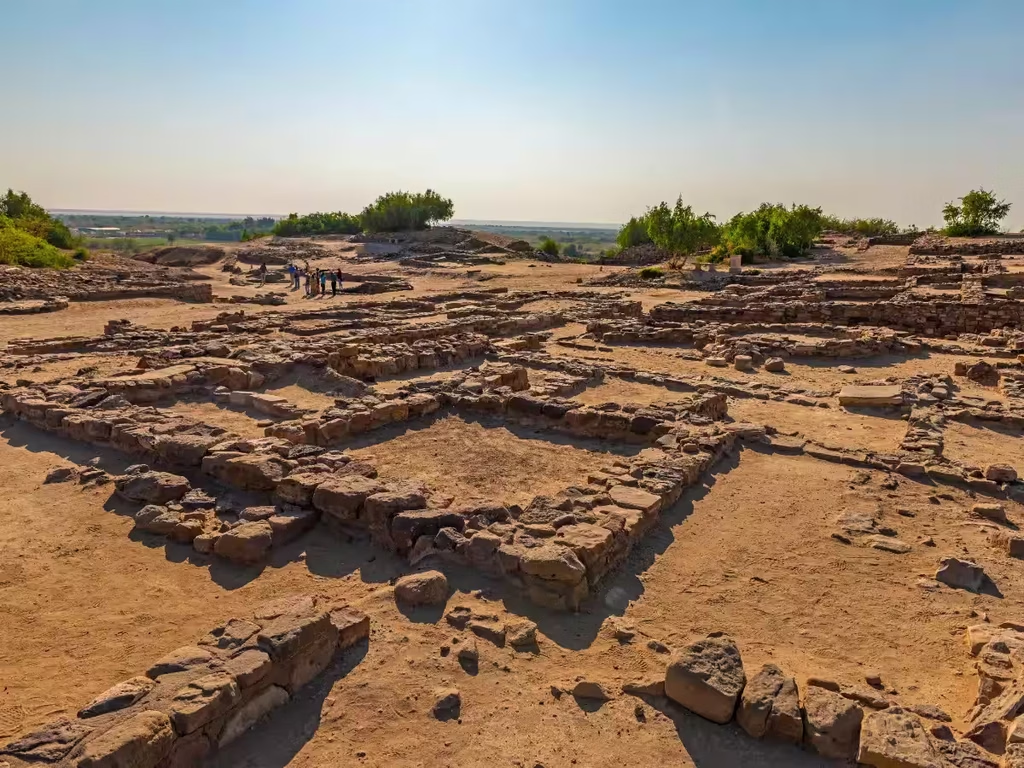
The Dholavira Harappan archaeological site is the primary attraction and the main reason travellers visit the destination.
The ancient settlement demonstrates advanced urban planning and includes fortified sections, residential areas, ceremonial spaces, gateways, and water storage structures.
One of its most remarkable features is the water management system. In a region where water is scarce, the ancient inhabitants developed methods to collect and store water for their settlement.
What to look for:
- The layout of the ancient city
- Fortifications and gateways
- Stone-built structures and residential areas
- Water reservoirs and drainage features
- Evidence of ancient planning and craftsmanship
Allow enough time to walk around the site and understand its layout rather than treating it as a quick photography stop.
4.2 The Ancient Water Reservoirs
Dholavira is especially notable for its water conservation and storage systems.
The settlement’s reservoirs demonstrate how its inhabitants adapted to the area’s challenging environment. These structures are an important part of the site’s historical and archaeological significance.
Visitors interested in engineering, sustainability, architecture, and ancient civilizations will find this aspect particularly fascinating.
4.3 Fortifications and Ancient City Layout
The city’s fortified sections reveal the importance of planning, defence, and organised settlement during the Harappan period.
As you explore, observe how the different parts of the city were arranged. These remains help visitors understand how ancient communities organised their living spaces and built settlements suited to their surroundings.
For the best experience, consider reading the official interpretive information available at the site, if provided.
4.4 Khadir Bet and the Surrounding Rann Landscape
Dholavira is situated on Khadir Bet, an island within the Great Rann of Kutch region.
The surrounding landscape is an attraction in its own right. Depending on the season and local conditions, visitors may see open salt-flat landscapes, dry terrain, and wide horizons.
The scenery is ideal for slow travel and landscape photography.
Remember that the Rann is an environmentally sensitive area. Stay on permitted routes and avoid entering restricted or unsafe terrain.
4.5 Road to Heaven
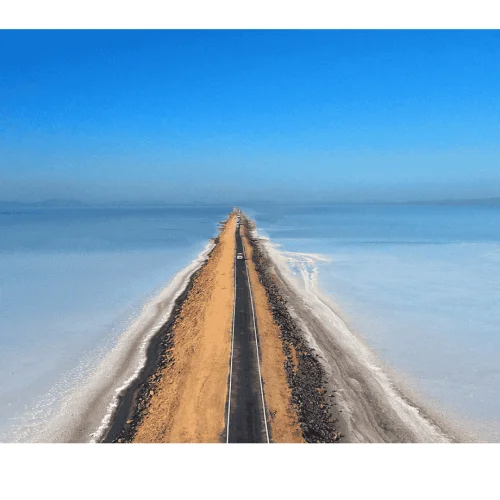
The Road to Heaven is a well-known scenic road experience associated with the Kutch region. Travellers often consider it when planning a wider trip around Bhuj, the Rann, and Dholavira.
Road conditions, traffic arrangements, weather, and access can affect the experience. Confirm the appropriate route and current access information locally before adding it to your itinerary.
If your schedule is limited, prioritise the archaeological site and include the scenic drive only when the route makes practical sense.
4.6 Local Villages and Kutchi Culture
A visit to Dholavira can also introduce you to the rural character of Kutch.
If you have time, explore nearby settlements where visitor access is appropriate. You may learn more about the region’s everyday life, local traditions, and relationship with the surrounding landscape.
Always seek permission before photographing residents, private homes, or community activities. Respect local customs and avoid disturbing daily life.
5. Things to Do in Dholavira
A visit to Dholavira can be more rewarding when you plan activities around the site’s history and natural surroundings.
Explore the Ancient City on Foot
Walking through the archaeological site allows you to appreciate the scale and layout of the settlement. Wear comfortable footwear, carry drinking water, and follow designated visitor routes.
Learn About Harappan History
Read about the Indus Valley Civilization before your trip. Understanding its urban planning, trade, craftsmanship, and water management will make the remains more meaningful.
Enjoy Landscape Photography
Capture the archaeological structures, open skies, and surrounding terrain. Morning and late-afternoon light can be especially useful for photography.
Carry a camera battery, extra storage, and sun protection if you plan an extended outdoor visit.
Take a Scenic Road Trip
The journey through Kutch is part of the experience. Plan sufficient time for breaks, changing road conditions, and stops at permitted viewpoints.
Enjoy a Quiet Heritage Getaway
Dholavira is suitable for travellers who prefer history and nature over crowded commercial attractions. An overnight stay can make the visit more relaxed, particularly if you want to explore the site without rushing.
6. How to Reach Dholavira
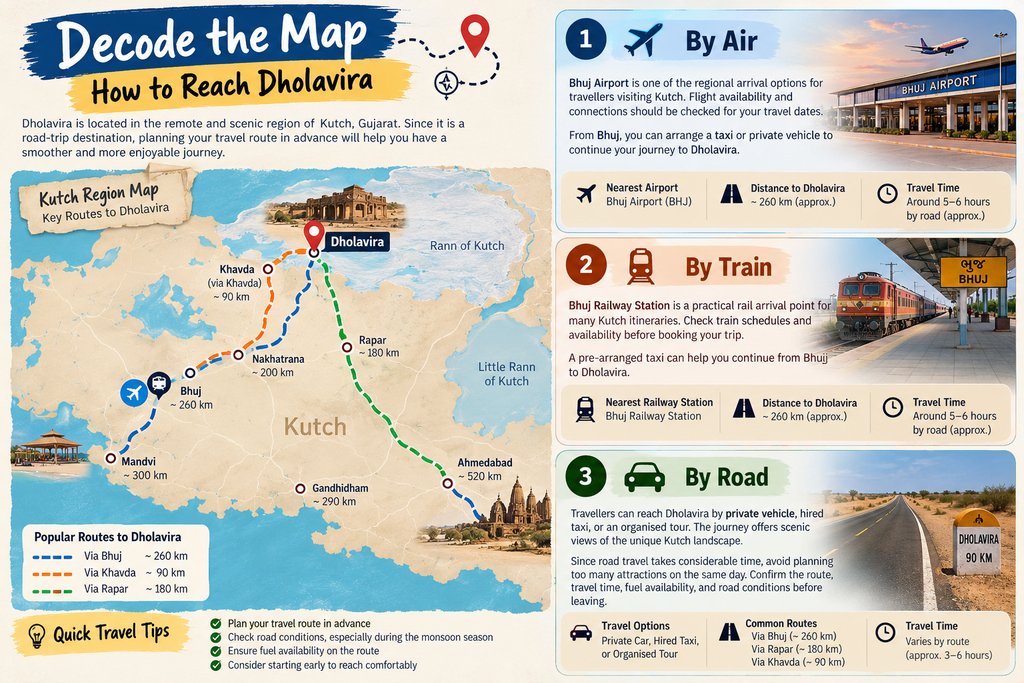
Route 1: By Air — Fly to Bhuj
Bhuj Airport is a regional arrival option for travellers visiting Kutch. Check flight availability and connections for your travel dates.
After landing, arrange a pre-booked taxi or private vehicle for the onward journey to Dholavira.
Best for: Travellers coming from outside Gujarat who want to reduce the initial road journey.
Route 2: By Train — Arrive at Bhuj Railway Station
Bhuj Railway Station is a convenient arrival point for many visitors exploring Kutch. Check train schedules and connections before booking.
From the station, you can arrange a private cab or include Dholavira in a customised Kutch tour itinerary.
Best for: Families, couples, and groups who prefer rail travel for the main journey.
Route 3: By Road — Enjoy the Kutch Journey
Travelling by road gives you flexibility over departure times, rest stops, and sightseeing.
You can drive your own vehicle, hire a taxi, or book an organised trip through a local travel provider. Confirm the recommended route for your departure point rather than relying on a single fixed route for every traveller.
Best for: Road-trip enthusiasts, families, photographers, and visitors planning multiple destinations in Kutch.
Which Travel Option Should You Choose?
| Travel Option | Suitable For | What to Plan |
|---|---|---|
| Flight + taxi | Travellers arriving by air | Flight connections and onward cab |
| Train + taxi | Travellers arriving by rail | Train timings and pickup arrangements |
| Private car | Families and independent travellers | Route, fuel, breaks, and parking |
| Hired cab or tour | Couples, groups, and customised trips | Vehicle, fare, itinerary, and waiting time |
Make Your Dholavira Journey Easier
For a smoother trip, you can enquire with Kutch Tours & Travels about Kutch sightseeing itineraries and with Hariom Tours & Travels about taxi services and outstation travel arrangements.
Before confirming, check the vehicle type, passenger capacity, total fare, sightseeing inclusions, and return-trip arrangements.
Travel tip: Save your route offline, carry drinking water, check the weather, and start early enough to reach your destination comfortably.
7. Where to Stay in Dholavira and Nearby Areas
Choosing the right accommodation depends on whether you prefer to stay close to the archaeological site or use Bhuj as your main base.
Stay Near Dholavira
An overnight stay near Dholavira is a practical option for travellers who want to explore the ancient city at a relaxed pace.
Local accommodation options may include guesthouses, resorts, and other stays, depending on current availability.
Before booking, verify the property’s exact location, room category, meals, air-conditioning, parking, power arrangements, and other facilities that matter to your trip.
You can explore the accommodation portfolio on the official StayGuru Hotels & Resorts website. The website lists properties and accommodation options across parts of Kutch, including options marketed for travellers exploring Dholavira and the Rann region. Confirm the specific property’s location and availability directly before making a reservation.
Stay in Bhuj
Bhuj is a useful base for travellers combining Dholavira with other destinations in Kutch. It offers a wider choice of accommodation and can work well for visitors arriving by train or air.
StayGuru properties to consider include:
StayGuru Usha Residency: Explore this option if you prefer a city-based stay and want to compare room categories and rates.
StayGuru Hariom Residency: A city accommodation option for travellers seeking a practical base for a wider Kutch itinerary.
StayGuru Parkview Residency: Consider this property when comparing city accommodation and room facilities.
StayGuru Hotel Atithi: An additional option to compare for a short stay in Bhuj.
StayGuru Resort Farm Villa: Located on the Bhuj–Bhachau Highway near Bhujodi Bridge, this property offers accommodation categories including Haveli Bhunga, Deluxe Room, and Rajwadi Room. Its listed facilities include a restaurant, swimming pool, parking, and Wi-Fi. Confirm the latest facilities and booking terms directly.
Explore the individual property details through StayGuru’s official website.
Which Area Should You Choose?
| Travel Requirement | Suggested Accommodation Area |
|---|---|
| More time at the archaeological site | Dholavira or a verified nearby property |
| A wider Kutch sightseeing itinerary | Bhuj |
| Train or flight arrival and departure | Bhuj, subject to your transport schedule |
| A resort-style break | Compare suitable properties around Bhuj |
| A family or group road trip | Choose according to room capacity, meals, parking, and route |
Important: Do not assume that every Bhuj hotel is close to Dholavira. Compare the map location and travel time before confirming a reservation.
8. Suggested Dholavira Itinerary
Option A: Two-Day Dholavira Trip
Day 1: Travel and Local Exploration
- Start from Bhuj or your chosen arrival point.
- Travel towards Dholavira, allowing time for breaks.
- Check in at your confirmed accommodation.
- Explore nearby permitted viewpoints or the local surroundings.
- Enjoy dinner and rest.
Day 2: Archaeological Sightseeing and Return
- Have breakfast and prepare for the visit.
- Explore the Dholavira Harappan archaeological site.
- Spend time understanding the city layout, fortifications, and reservoirs.
- Take photographs where permitted.
- Return to your accommodation or continue to your next destination.
Keep the schedule flexible because road travel, weather, and site visiting hours can affect the plan.
Option B: Three-Day Kutch Itinerary
Day 1: Arrive in Bhuj, check in, and explore selected local attractions.
Day 2: Travel to Dholavira and explore the archaeological site and surrounding landscape.
Day 3: Return towards Bhuj or continue to another destination such as Mandvi or the White Rann, depending on your route and available time.
This itinerary is a planning framework, not a fixed timetable. Distances, driving times, and attraction access should be confirmed before departure.
9. Essential Travel Tips for Dholavira
Use these recommendations to make your trip more comfortable.
- Carry sufficient drinking water: Outdoor sightseeing can be tiring, especially during warmer months.
- Wear comfortable footwear: You may need to walk over uneven ground.
- Use sun protection: Carry sunscreen, a hat, and sunglasses.
- Book accommodation in advance: Confirm room availability, meal arrangements, and check-in timings.
- Check site timings: Verify opening hours, entry charges, and any visitor restrictions before travelling.
- Plan fuel and rest stops: Do not assume that fuel stations or food outlets will be available exactly when needed along the route.
- Keep offline navigation available: Mobile coverage can vary in remote areas.
- Respect the heritage site: Do not climb on ruins, remove objects, litter, or touch protected structures unnecessarily.
- Confirm transport details: Agree on the vehicle, fare, waiting time, and itinerary before departure.
- Allow flexibility: Avoid scheduling an important train or flight immediately after a long return road journey.
Frequently Asked Questions
1. What is Dholavira famous for?
Dholavira is famous for its ancient Harappan city, advanced urban planning, fortified structures, water reservoirs, and archaeological importance. It became a UNESCO World Heritage Site in 2021.
2. Where is Dholavira located?
Dholavira is located on Khadir Bet in the Great Rann of Kutch region of Gujarat, India
3. What is the best time to visit Dholavira?
October to March is generally a comfortable period for outdoor sightseeing. Weather conditions can vary, so check the forecast before travelling.
4. How many days are enough for Dholavira?
One full sightseeing day may be sufficient for a focused visit if travel arrangements allow. A two-day trip is more relaxed, especially when travelling from Bhuj.
5. How can I reach Dholavira from Bhuj?
You can travel by private vehicle, hired taxi, or organised tour. Confirm the route and expected journey time with your driver before departure.